

Prayer is just eating your Cheerios without your headphones on.
I heard that description recently, and it struck me because it describes humdrum prayer so accurately. Prayer can feel quiet, repetitive, and even boring. When we sit down to pray without a clear sense of purpose, we can walk away discouraged and wonder if it is even worth trying again.
Overcoming Boredom in Prayer
When we enter prayer without a clear plan or idea of what we are doing, we are often left with a sense of boredom that discourages us from ever trying to pray again. If you have ever experienced boredom and disinterest during prayer time, the Gospel of the Transfiguration (cf. Mt. 17:1-9) can come as a real shock.
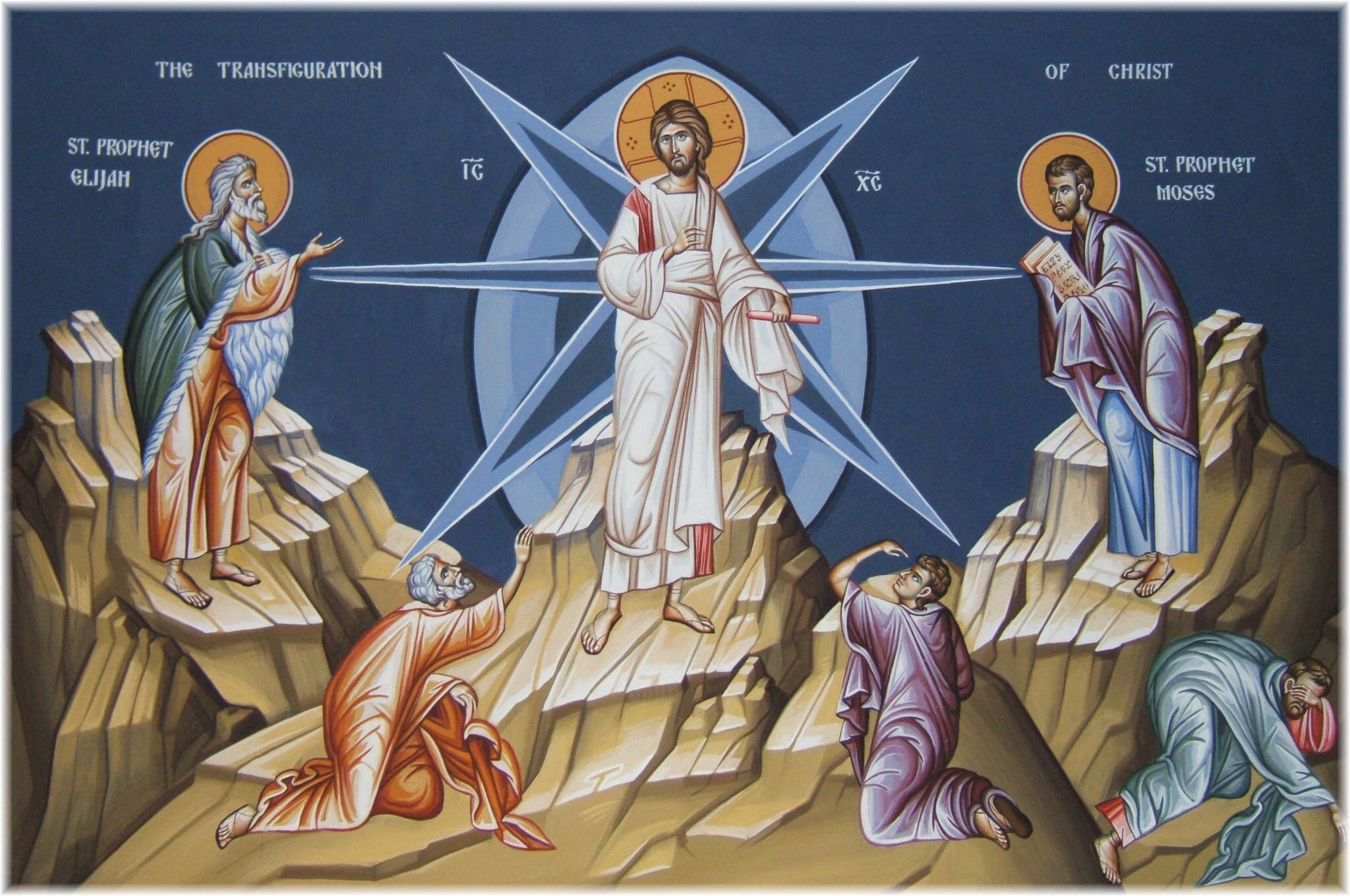
The Transfiguration shows us what prayer really is: not boredom, but encounter. Jesus took three of his closest disciples up Mount Tabor, and they had such a profound experience of prayer that they never wanted to go back down the mountain. The problem is that we often lack desire, which is essential to authentic prayer.
Desire is the Beginning of Prayer
The Catechism of the Catholic Church speaks of man’s desire for God.
Man is in search of God. In the act of creation, God calls every being from nothingness into existence… Even after losing through sin his likeness to God, man remains an image of his Creator, and retains the desire for the one who calls him into existence (Catechism of the Catholic Church, 2566).
We desire God when we begin prayer. Where we often trick ourselves is that we think that prayer is our initiative. However, prayer always begins with God, and one could say that in us it begins with a certain nostalgia. We desire to return to the one who created us and sustains us in existence.
The reality of heaven is overwhelming. St. Thomas Aquinas had a mystical experience towards the end of his life, getting a glimpse of the joys of heaven. After that, he never wrote again. The man who contributed more to Western culture than perhaps any other of the last two millennia said that he saw all of his work as “straw” compared to the glories of heaven. This is what happens when prayer becomes real. It changes how we see everything. When the disciples saw Jesus transfigured on Mount Tabor with Elijah and Moses, they experienced a preview of heavenly glory.
The Problem is that our Love is Weak
One difficulty in our prayer is that we do not have sufficient longing for heaven. When Pope Benedict XVI reflected on the virtue of hope in Spe Salvi, he noted that many people do not desire heaven because they are too satisfied with the things of this present world.
Perhaps many people reject the faith today simply because they do not find the prospect of eternal life attractive. What they desire is not eternal life at all, but this present life, for which faith in eternal life seems something of an impediment (Pope Benedict XVI, Spe Salvi, 10).
The apostles were caught up in prayer on Mount Tabor. It was impossible to consider anything from this life as compared to the bliss of accompanying Christ in his glory. We need to think more about heaven if we are going to begin to desire it appropriately. We need to desire to pray, and we need to desire the happiness of eternal life with Jesus, which we commonly call heaven.
Look to the Things of Heaven
True prayer is a nostalgia for God and the good things that he gives us as blessings. We often experience, however, a different nostalgia, a nostalgia for the things of this world. One of the favorite phrases of Scott Hahn, renowned Biblical scholar, is that it took forty years to take Israel out of Egypt, but it would take centuries to take Egypt out of the hearts of Israel. Often in the desert, they would complain to Moses that their lives had been better while enslaved in Egypt.
Similarly, we can trick ourselves into thinking that our lives were more exciting or satisfying before encountering Christ. However, our lives will only be full and satisfying when we put Christ at the center.
Arthur Brooks writes that addictive behavior is often linked to boredom. Many of our vices sprout up when we feel bored, overwhelmed, or restless. In those moments, prayer feels difficult compared to the immediate pull of distraction.
We need to ask the Lord to reveal himself to us in prayer: not necessarily with dazzling light, but with the quiet certainty of his presence. Once we truly encounter him, prayer stops being boring. It becomes the place we most want to be. Even when prayer feels dry, Christ is present. The Transfiguration reminds us not of what prayer always feels like, but of who is always there.
The disciples never forgot what they saw on Mount Tabor. That experience sustained them through suffering, persecution, and even martyrdom. The same Lord waits for us in prayer. Prayer may begin like eating Cheerios without headphones. But if we persevere, it can become a foretaste of heaven.