

How does the Church respond to a societal phenomenon like artificial intelligence? There are doctrinal, social, and ethical aspects that must be addressed. Pope Francis addressed the G7 on the ethical dimensions and risks of AI. Since ascending to the papacy, Pope Leo XIV has continued to monitor technological advances while offering pastoral advice on how to use them in ways that respect human dignity. Artificial intelligence has become a major priority of his pontificate.
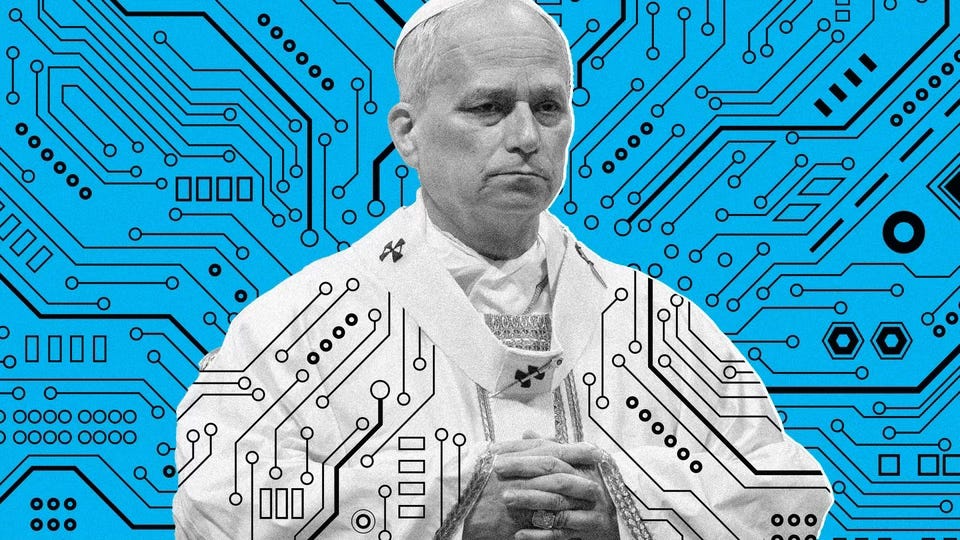
He has already signed an encyclical addressing the ethical and social questions raised by AI, though the document has not yet been published. On May 16, the Vatican revealed that the forthcoming encyclical follows Pope Leo XIV’s earlier decision to establish an interdicasterial commission to study artificial intelligence.
What is a dicastery?
A dicastery is a department within the Vatican that helps the Pope govern the Church. We can refer to the entire system as the Curia. Each dicastery is typically headed by a bishop or cardinal, although under Pope Francis, the Apostolic Constitution Praedicate Evangelium reformed the Curia and established 16 dicasteries. Each dicastery has a distinct mission, and its prefect regularly updates the Holy Father on developments within that sphere.
A New Reality in the Curia
In an audience with the Holy Father on May 3, 2026, Pope Leo XIV charged Cardinal Michael Czerny to form a commission that combines the resources of several departments of the Curia. Four dicasteries and three pontifical academies will be represented. The commission will be headed for now by Cardinal Czerny himself, while the Pope will be naming a new head each year.
Who is involved and why does it matter? Examining which dicasteries will participate offers insight into the scope of the commission’s work. The founding coordinator is Cardinal Czerny, prefect of Promoting Integral Human Development. This dicastery studies the situation of the underprivileged and migrants. It also oversees Caritas Internationalis, one of the largest works of charity within the Catholic Church.
The Main Players
Responding to the need for clear teaching regarding AI, the Dicastery of the Doctrine of the Faith will provide a representative to the Commission. This implies that the commission will help clarify and develop Church teaching as it relates to the reality of AI.
The involvement of the Dicastery of Culture and Education points to the Pope’s desire to engage contemporary culture, which is increasingly shaped by vast technological advances. In January 2025, the Dicastery of the Doctrine of the Faith and the Dicastery for Culture and Communication published the note Antiqua et Nova, addressing several concerns regarding artificial intelligence.
The Dicastery for Communication will also provide a representative. This reflects the Vatican’s recognition that AI is becoming increasingly central to communication in the modern world. Pope Francis and Pope Leo have included the topic of artificial intelligence in their discourses regarding the World Day of Social Communication. The work of this dicastery is increasingly intertwined with the rapidly developing field of AI.
In addition to the four dicasteries involved, three pontifical academies will also contribute. Among them is the Pontifical Academy for Life. The academy focuses on life issues and recently published a declaration on the humanization of medicine.
The Pontifical Academy of Sciences often has its finger on the pulse of culture, and this initiative will be no different. While there are certainly moral and ethical concerns, the Church must also listen carefully to scientists to evaluate emerging technologies prudently and fairly.
Finally, the Pontifical Academy of Social Sciences will also contribute to the initiative. In October, this academy hosted fifty experts for the seminar Digital Rerum Novarum: Artificial Intelligence for Peace, Social Justice, and Integral Human Development, cosponsored by the University of Notre Dame.
Purpose
What is the purpose of this new commission? The rescript published by Cardinal Czerny states that its purpose is to “facilitate collaboration and the exchange of information amongst the members of the group regarding activities and projects concerning Artificial Intelligence, including policies on its use within the Holy See, promoting dialogue, communion and participation.”
Rather than treating artificial intelligence as a passing trend, Pope Leo XIV appears determined to develop a coherent moral, social, and pastoral response to one of the defining technologies of the modern age. This recalls Pope Leo XIII’s response to the upheavals of the Industrial Revolution. Pope Leo XIII signed his groundbreaking encyclical on Catholic Social Doctrine, Rerum Novarum, on May 15, 1891. Pope Leo XIV signed Magnifica Humanitas on May 15, 2026. Across different eras of technological disruption, the Church continues to apply the enduring principles of Catholic social thought to new economic and technological realities.