

“The brook near where Elijah was hiding ran dry, because no rain had fallen in the land” (1Kings 17:7). The author of today’s first reading then recounts the story of Elijah and the widow of Zarepath. God intervenes even among the non-Israelites. God gives hope to all.
Just as God brought hope to a foreign widow through Elijah during a time of famine, he raised up St. Ephrem centuries later to nourish souls during a different kind of drought – the confusion caused by heresy and division.
We celebrate today the “harp of the Holy Spirit,” St. Ephrem the Syrian. He brought hope to the people of Nisibis, and later Edessa in modern-day Turkey. Dealing with the heresies of his day, principally Gnosticism, he responded by writing hymns set to popular music. One example is found in a hymn he composed to honor a holy bishop:
O you who are made priest after your master, the illustrious after the excellent, the chaste after the grave, the watchful after the abstinent, your master from you has not departed; in the living we see the deceased: for lo! In you is his likeness painted; and impressed upon you are his footprints, and all of him shines from all of you. R., Blessed be He Who in His stead has given us you! (St. Ephrem the Syrian, Nisibene Hymns, Hymn 18)
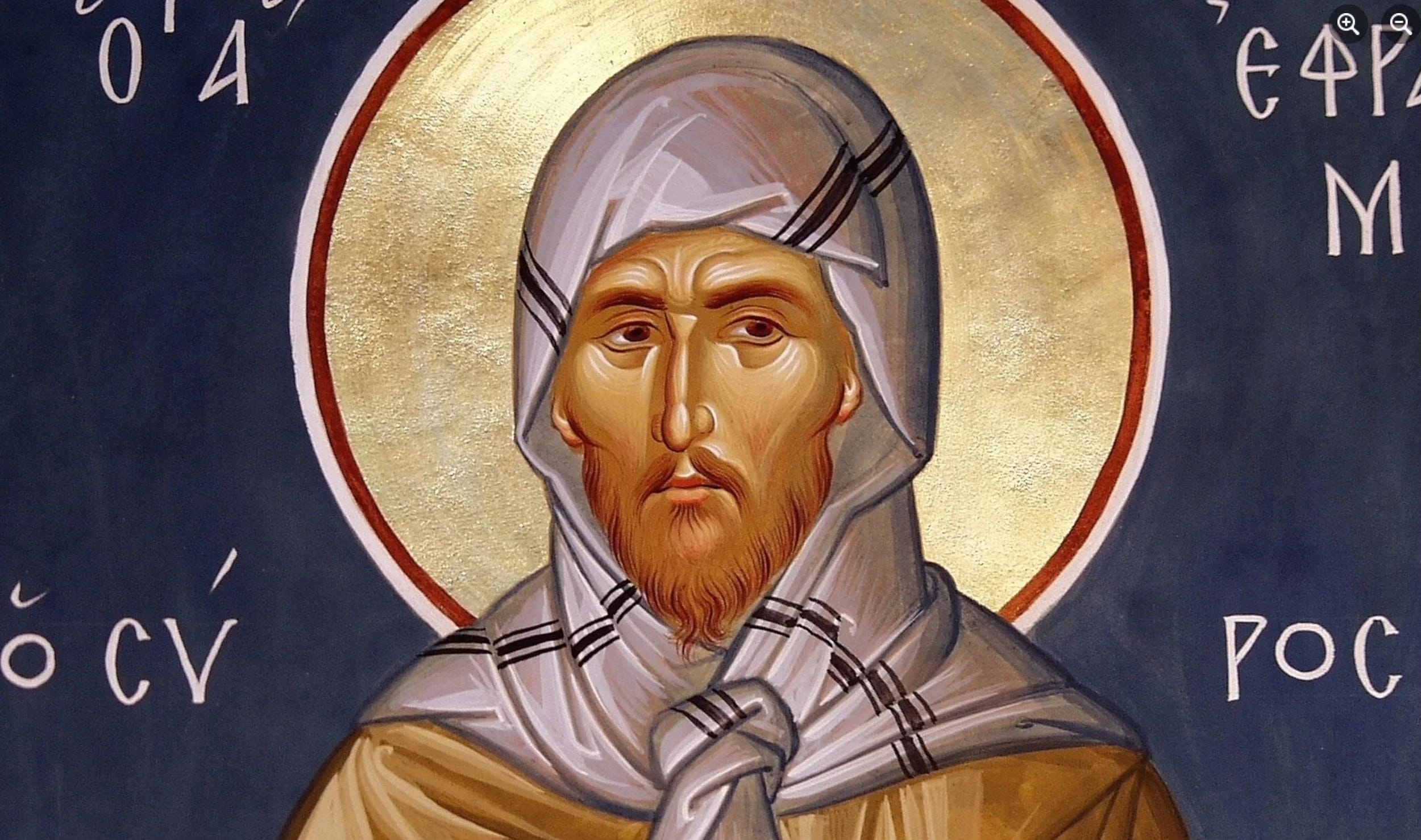
Even during spiritual drought, we are called to bring living water to others. We do this through our witness, our words, and our willingness to point others toward Christ. We can learn from St. Ephrem to go deep in the Word of God. Upon arriving at the monastery near Edessa, he embraced a life of asceticism and ceaseless study of the Word of God. Pope Benedict XVI observed that beneath Ephrem’s distinctly Syriac expression of Christianity lay the universal virtues that characterize every disciple of Christ.
The common and fundamental Christian identity appears in the specificity of his own cultural expression: faith, hope - the hope which makes it possible to live poor and chaste in this world, placing every expectation in the Lord - and lastly, charity, to the point of giving his life through nursing those sick with the plague (Pope Benedict XVI, 28 November 2007).
He chose to remain a deacon, signifying his desire to be a servant of others, also through his participation in the liturgy. As we prepare for the Feast of the Sacred Heart and the consecration of our country to that Heart, St. Ephrem reminds us that even in times of spiritual dryness, those who draw deeply from God’s love become springs of hope for others.