

“I have my first meeting coming up. What am I supposed to do?”
People can often be confused about how to prepare for spiritual direction because they are not sure what it is. Frequently, people confuse spiritual direction with counseling or therapy. The spiritual director is not a handkerchief to catch your tears. He or she is an outstretched hand, sometimes helping you up and sometimes shining light on the road God has called you to follow.
Spiritual Direction vs. Counseling
Spiritual Direction does not take the place of good psychological counseling. It can, however, help in a lot of the same cases. Something important to recognize is that Spiritual Direction and Counseling have different purposes. Counseling and therapy focus on mental and emotional health. Spiritual Direction addresses your relationship with God and your discernment of his action in your life. Feelings and emotions may come to the surface in both cases, but they are not the same thing. You may find substantial overlap as far as the topics you discuss in each context, but the lens and purpose are different.
Spiritual direction is not primarily about getting answers from someone else. Rather, it is about learning to recognize God’s voice and respond to his grace.
Getting Ready for the First Session
You are about to embark on a journey that will hopefully help you gain clarity of what God is asking of you in this stage of your life.
The experience may be bewildering, and it can be helpful to plot out a “map” that you can share with your spiritual director as you begin to discern the ways God is working in your life.
You don’t need the perfect spiritual autobiography or even to understand perfectly how spiritual direction works. But before sitting down with your spiritual director, reflect on your goals and aspirations for this formative relationship.
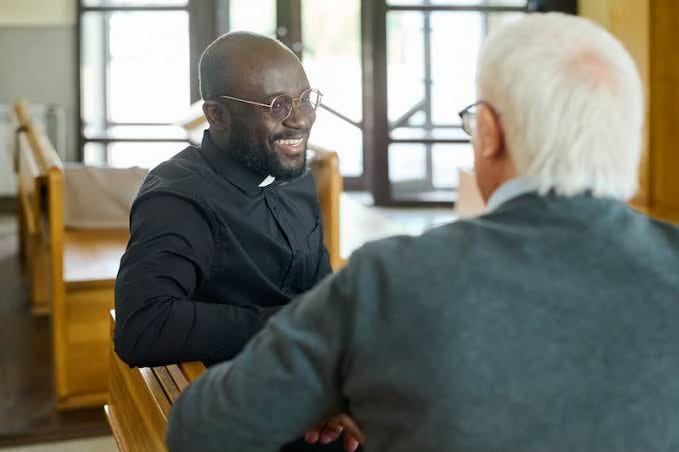
Set Expectations
It is good to take some time to reflect on your initial expectations. These may change over time, but they are helpful for you and your spiritual director. What are you looking for? Why have you sought spiritual direction? What do you know about spiritual direction or the person you are meeting?
Begin your meeting by speaking about these things. Then, move on to give context about who you are and what your life has been like.
Set the Context
You do not have to share every detail of your past life. Look at what is essential and try to draw a map of who you are and what events have shaped you into the person you are now. Describe your home life growing up. Is your family united? Was there economic hardship? Were there separations or tragedies that have left a mark in your soul? This helps the spiritual director form an initial understanding of what is going on in your soul and, more importantly, how you see God.
Look at the major life decisions you have made. How have you made these decisions? How have they turned out? By looking at the life you have now, do these decisions make sense? Were they driven by choice or by circumstance? Where do you see God’s action present in your story? Share any experiences you may have had with vocational discernment. It is very helpful to know if you have experimented with religious life. Have you ever thought about becoming a priest or a religious? Have you taken any steps in that direction? Are there any relationships in your past or present that are important to describe? All of this helps to know you as a person.
Your Spiritual Life
What is your prayer life like right now? Perhaps your prayer life is limited to Sunday Mass. Maybe you do not go to Mass but spend time in Eucharistic Adoration every week. This is a good thing to share. Do you have any experience of mental prayer? What does it mean for you to pray? Perhaps you feel that worship music helps you experience God. How do you experience God in silence, in nature, in reading Sacred Scripture, in the liturgy, or in contemplating his goodness?
What kind of formation have you received in the spiritual life? You might share your formation through spiritual reading and retreats. What has helped you grow in your faith? Describe the experiences that you find most meaningful, both negative and positive.
What moves you spiritually? Perhaps you like the idea of being a spiritual person. Or you feel that the best people are spiritual. Do you feel moved by the great mysteries of our faith? Does the Incarnation move you? Perhaps the sight of Jesus on the Cross makes you feel like something has to change in your life. Does reading the lives of the saints make you want to change radically to correspond to the great graces that God has given you in your life? Share what resonates most with you.
Your own prayer needs to be where you are encountering God, and you bring those experiences to your spiritual direction. Your lights and shadows from prayer are what you bring to your spiritual direction for help in discernment.
Spiritual direction cannot substitute for your own spiritual life, but it can be a powerful catalyst for going deeper in your relationship with God. Sometimes, we can be tempted to avoid spiritual direction until we have everything perfectly mapped out. I would suggest you do your best and then go for it. Sometimes, it is only by beginning the journey that we can discover everything we need to record on the map.
Thank you, Fr. Sheehy.