

Eduardo Verástegui broke into the American movie scene with a quiet pro-life movie in 2006, Bella. The movie tells the story of José, whose soccer career was cut short by a tragic car accident that killed a small child. A few years later, he is working at a restaurant alongside his adoptive brother.
One day, one of the waitresses is distraught because she got fired for showing up late. José goes with her and discovers she is unexpectedly pregnant. He leaves work behind and tries to help her figure out what to do.
In one powerful scene, they visit his family home, and she discovers that her boss, the owner of the restaurant, has been adopted into the family. Nonetheless, he is entirely part of the family, and it makes her think about the future her child might have if she decides to go the route of adoption.
She is conflicted, however, and at one moment our young protagonist accompanies her to a clinic, where it seems she is exploring the possibility of abortion. He leans over to her and promises to raise the child himself. Having seen the love in his family and the way the adopted child was completely received into the family nucleus, she consents to this alternative solution.
Years later, she meets her daughter at the beach. The daughter’s name is Bella: beautiful.
The movie invites us to see that life is beautiful.
From the Womb to the Tomb
Because life is beautiful, it must be defended from the womb to the tomb. There are so many temptations to attack life, especially when it seems inconvenient. Christ paints a picture of a situation like that in the parable from today’s Gospel. The tenants of the vineyard want to take possession of the vineyard. They want to have the power, and they do not take kindly to the idea that the owner is sending his representatives to collect from them what he is owed.
Eventually, they even murder the son of the owner of the vineyard. It is, for me, such a powerful scene, foreshadowing the death of the Son of God, who came into the world to save it, but who was brutally murdered on a cross.
Forgetting the gift
The problem of the tenants is that they forget what is essential: The vineyard is a gift. It does not belong to them. Perhaps this is one of the most important ideas to recover when we talk about the value of human life. Life is a gift.
We did not give ourselves existence. We did not create ourselves. Every human life is not something that another person has the right to possess or dispose of. Every human person possesses a dignity that only God can give.
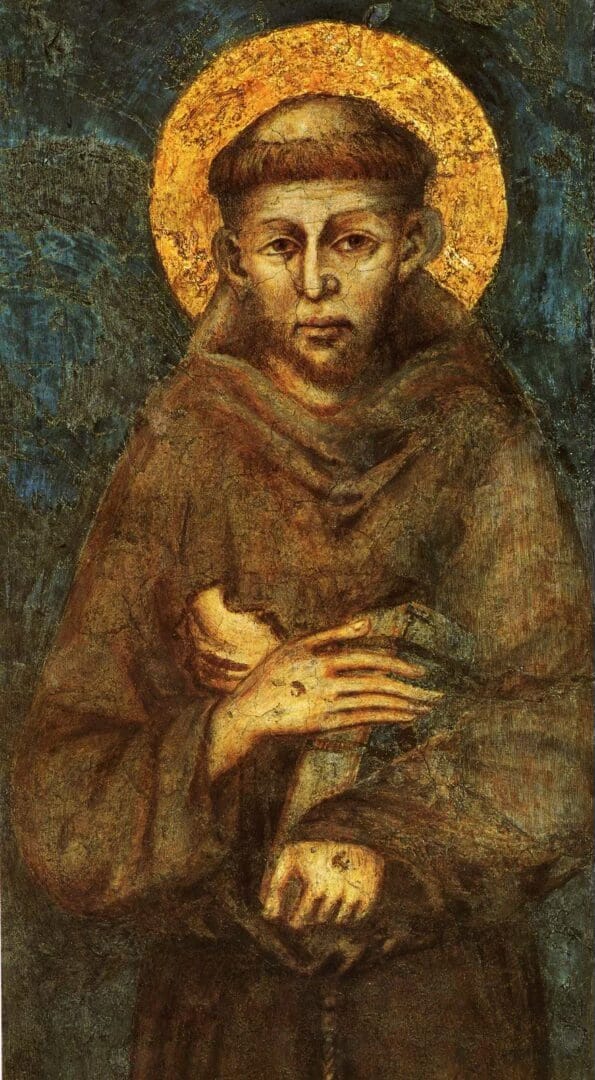
Today, we celebrate the 800th anniversary of the death of St. Francis of Assisi. It seems curious that in the Catholic faith, where we celebrate life so much, we celebrate saints on the anniversary of their deaths. This is because their death day is the day of their birth into true life.
Recognizing the beauty of life
If we are going to defend life, it is important for us to recognize the beauty of life, even in the midst of difficult situations.
We are not the sum of our weaknesses and failures; we are the sum of the Father’s love for us and our real capacity to become the image of the Son (Pope St. John Paul II, 28 July 2002).
This is a profoundly Christian way of understanding the human person.
When St. Francis of Assisi found out how much Christ loved him, he could not help but respond by giving his entire life.
Francis had a particular devotion to the Lord’s own vulnerability - in the manger, in the Eucharist, and on the Cross - highlighting God’s presence in the most defenseless among us (Respect Life, “Francis, Visionary of Life”).
Standing up for the weak and defenseless
The more we get to know Jesus, the more we will want to stand up for the weak and defenseless. He has a prayer that could inspire all of us as we try to find more ways to stand up for life.
Most High, Glorious God, enlighten the darkness of my heart and give me true faith, certain hope, and perfect charity, sense and knowledge, Lord, that I may carry out your holy and true command (Respect Life, “Saint Francis’ ‘Prayer before the Crucifix’”).
This prayer can help us today. If we are going to build a culture of life, we need more than arguments. We need hearts that have been enlightened by Christ and his Gospel.
We need true faith. We need certain hope. We need perfect charity.
Respect for human life requires Christians to stand up for life, respecting the inherent dignity of every human being. Sometimes, it can be uncomfortable to hear the Church’s teachings when we feel that something else would be more expedient. But the Church always wants to tell us the truth in love.
Let’s give witness to the beauty of life by showing the depth of our love. We want to serve others and bring them closer to Christ. Today, on Respect Life Sunday, let’s make sure that we are doing everything we can to promote a culture of life.
Every human life is a gift from the Father. Every human life is an invitation to encounter Christ.