

Sitting across from people who are interested in the Catholic Church, I have noticed two primary reasons why they become curious. First of all, many people get interested in the Catholic Church after studying history. Looking at the Protestant Reformation of the 16th century, they recognize some anomalies and wonder if perhaps the reformers, while recognizing some obvious abuses, went too far in throwing off the authority of Rome altogether.
Others become interested because of the doctrinal solidity of the Catholic Church. Even if they have personal qualms about some of the teaching, they admire that the Church has maintained the same teaching in spite of the world changing so much. There is something comforting about knowing that truth doesn’t change.
Not Quite Enough
I appreciate both of these starting points for people who become interested in the Catholic Church. And yet, I find them to be insufficient. I think we are looking for more than a historically cogent account of salvation and a teacher who does not change the syllabus halfway through the semester. We are seeking meaning. We are seeking the face of God.
When we come to faith, we have to be careful to not be too easily satisfied. Nothing less than God can fill us up.
As I lead people through the teachings of Catholicism, I enjoy the back and forth and learn from the questions they ask. At the same time, I carry in the back of my mind the constant concern that they may grow in their love for Jesus. If they were to become Catholic but don’t encounter Jesus, I certainly feel I have failed as a guide.
The Surprise
While we are truly seeking God, the surprising truth is that he is the one seeking us. We are hard-wired to seek Him. Augustine, the saintly bishop from Hippo, North Africa, phrased it: “Our hearts are restless until we rest in him.” Our desire to love is ordered towards Him.
God wants you and loves you. How are you going to respond?
When we want to get to know the faith, we look at the Creed, the set of basic doctrines laid down in the early Church and that serve as a litmus test for our faith. The word for “creed” in Greek is symbolon. This means a sign or identifying mark. For us, it becomes our identity and signifies our relationship with God. We are not merely setting down a series of affirmations. We are establishing a relationship with God.
Called To Seek
It is important that as we seek to grow in the faith, we recognize that we are called to be seekers. We are seekers of truth. We are seekers of answers. We want to know who we are. What does it mean to be spiritual? What does it mean to have a soul? What does it mean to be human?
Perhaps we become suspicious that we can only find the deepest meaning of our lives if we discover our relationship with God. He made us for himself and we discover who we are, only in relationship with him. Heeding one of Pope St. John Paul II’s favorite lines from the Second Vatican Council, we let the words of Gaudium et Spes 22 echo in our hearts:
Only in the mystery of the incarnate Word does the mystery of man take on light.
The Good News is that we don’t have to just look for God. This is the story of all humanity, looking for God. The wonderful miracle we live as Christians is that God has come looking for us. This is the mystery of Divine Revelation – God’s communication of himself, most fully realized in sending us his own divine Son, Jesus Christ.
And so, as we seek God, we run through various sources that connect us to him, especially Sacred Scripture. Additionally, we have Tradition and the Magisterium of the Church that help us to understand who God is and how he wants to establish a relationship with each one of us.
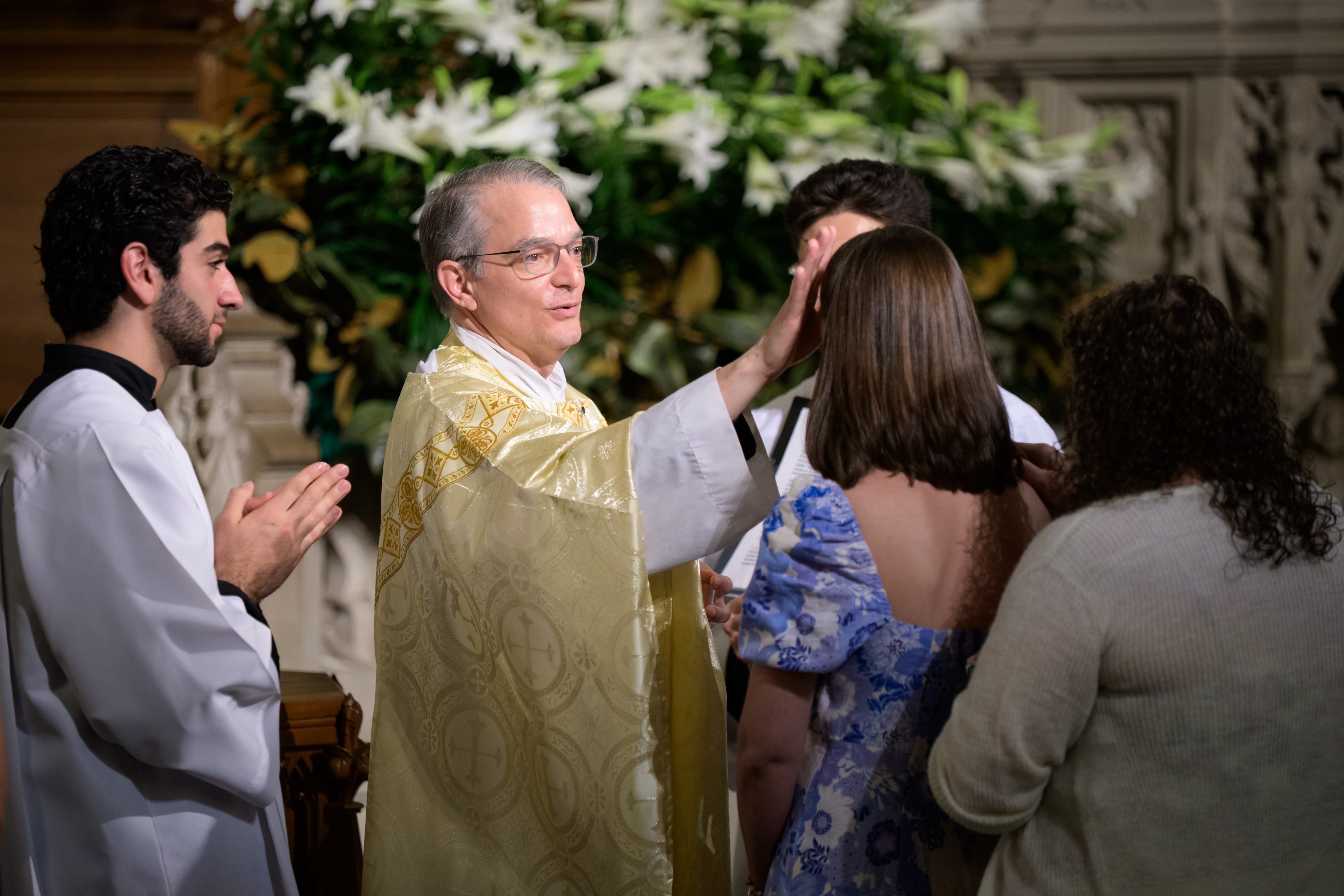
Let’s pray for everyone who is authentically seeking God, especially those people who have begun a formal process within the Catholic Church. May God use catechists to preach the word “in season and out of season” (cf. 2 Tim. 4:2) so that many hearts may be softened and may receive the love of God. Catholicism is not merely intellectually satisfying. Catechesis should lead to communion with Christ.