

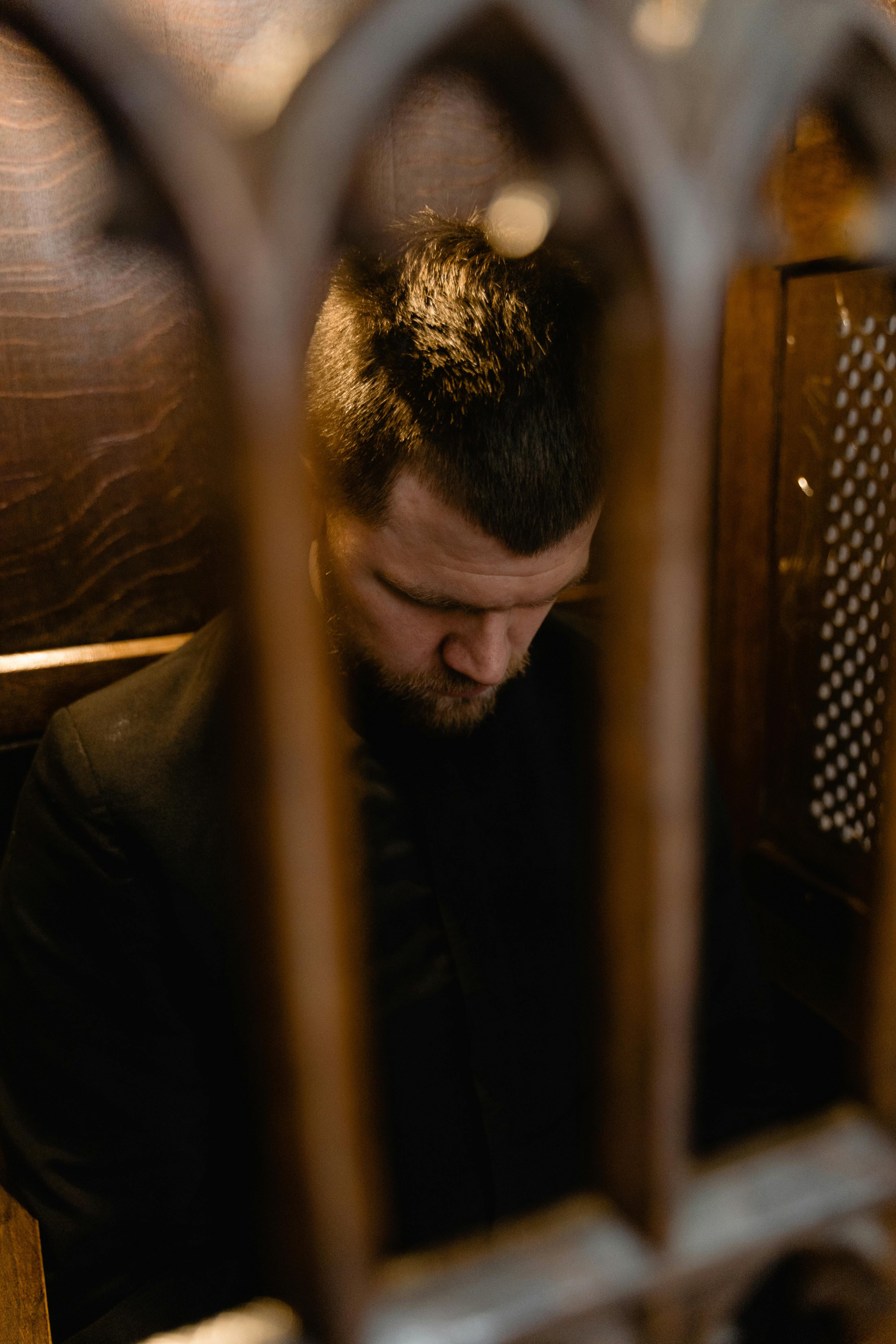
Some people drop out of helicopters to ski down pristine, untouched snow in search of a thrill. As a priest, I sit in a box and hear confessions. Both activities require courage, but of different kinds. Confession is exciting because I see how it leads people to Christ, and I want to show the “spiritual health benefits” of confession. Hearing confessions is a beautiful ministry – one that stretches me in ways I could never have imagined. I long to dispense the merciful forgiveness of Jesus while helping the faithful take their next step toward holiness. Through my experience as both penitent and confessor, I have experienced how confession supports the ongoing Christian task of conversion.
Conversion is a word we use often in Christianity, but one we don’t always grasp fully. What is conversion? It is the turning of our minds and hearts toward Christ. Growing up, one of our parish priests loved to repeat the Greek word, metanoia, which we render as conversion. At its root, it means a change of mind – an inner turning of thought and spirit. Even the English word “conversion,” from the Latin vertere, carries this sense of turning. Much of Christian life is precisely this: turning away from sin and turning toward life in Christ.
Nothing satisfies more than life in Christ. Sit with that phrase for a moment. Do you agree or disagree? Sometimes, it is hard to believe. Why is that? The joy of life in Christ does not stimulate us the same way earthly pleasures do. When we eat a bowl of ice cream or spend time with a dear friend, the experience lights up the reward centers in our brains. Meanwhile, life in Christ does not excite us quite the same way, especially early in our conversion process. Jesus invites us to conversion while respecting our freedom. If we were to see Christ for all he is, we might feel compelled to follow him by being overwhelmed by his glory. His love is real, but less directly perceptible. Jesus calls softly, meeting us patiently where we are.
Confession supports this conversion even before we step into the confessional. The examination of conscience itself is enormously fruitful. From the standpoint of spiritual growth, it might be the most important part of confession. The sacrament, of course, climaxes with absolution – the moment grace is objectively given. But subjectively, the fruitfulness of the sacrament depends on our interior disposition. The better the preparation, the richer the grace received. A careful examination of conscience corresponds directly with deeper spiritual renewal.
Pope Saint John Paul II reflected often on confession; he lived the priesthood with every fiber of his being. Early in his pontificate, the 1984 Synod of Bishops examined the role of confession in the life of the Church. His Post-Synodal Exhortation, Reconciliatio et Paenitentia (2 December 1984), distilled those insights. He wrote that penance is a conversion that moves from the heart to our deeds and then shapes our entire life. This progression – heart, action, life – is the backbone of Christian growth.
When we pray our examination of conscience, we are not merely listing misdeeds. We’re searching for the attitudes and habits that give rise to sin. We do this so real change becomes possible. Hoping to simply “be better” never works. Conversion requires identifying the underlying patterns that lead us astray – and cutting them out. If nothing changes, nothing changes.
Thinking about grace and conversion always makes me reflect on the competing strategies of Jesus and the Devil. In temptation, it feels like both Jesus and the Devil are whispering to us. The Devil tells us: “Do it. It doesn’t matter. It’s not a big deal. Everyone else is doing it; you are going to love it.” Jesus counters: “This is going to hurt you. You are not made for this. Run away.” If we end up sinning, the dynamic changes tremendously. The Devil tells us: “It’s too late. You can’t go back. God hates you.” Jesus, on the other hand, speaks words of grace and forgiveness. “Come back. I love you.”
If confession takes courage for the priest, it takes courage for the penitent, too. I’m often amazed at the bravery and sincerity of those who come to confession and share the inmost secrets of the soul with humility and trust. Beyond the sins themselves, I see a struggle to break free from the Devil’s grip and fall into the merciful arms of Christ, the Lord. Conversion is simply the continual turning of the heart towards Christ – and in confession, we find the strength to make that turn every time.
I love the way you explain things!!