

Where does Ash Wednesday come from and what does it mean for us?
Echoes from deep in Salvation History
We know that in the Old Testament, people repented by wearing sackcloth and putting ashes on their heads. In the Book of Esther, Mordecai puts on sackcloth and ashes upon hearing King Ahasuerus’s decree. The prophet Daniel speaks of turning to the Lord “to seek help, in prayer and petition, with fasting, sackcloth, and ashes” (Dn. 9:3). The people of Nineveh in the Book of Jonah also don sackcloth and ashes upon hearing the preaching of destruction from the reluctant prophet. The king himself leads the penitential practice.
Jesus recalls these ancient practices when he rebukes Chorazin and Bethsaida:
If the mighty deeds done in your midst had been done in Tyre and Sidon, they would long ago have repented in sackcloth and ashes (Mt. 11:21).
The early Christians wanted to live as closely as possible to the way Jesus lived and we hear echoes of these practices in early Church writers like Tertullian and Eusebius. Around the 8th century, the dying were sometimes laid on sackcloth sprinkled with ashes, and the priest would say the words we still hear at Ash Wednesday: “Remember you are dust, and to dust you shall return.”
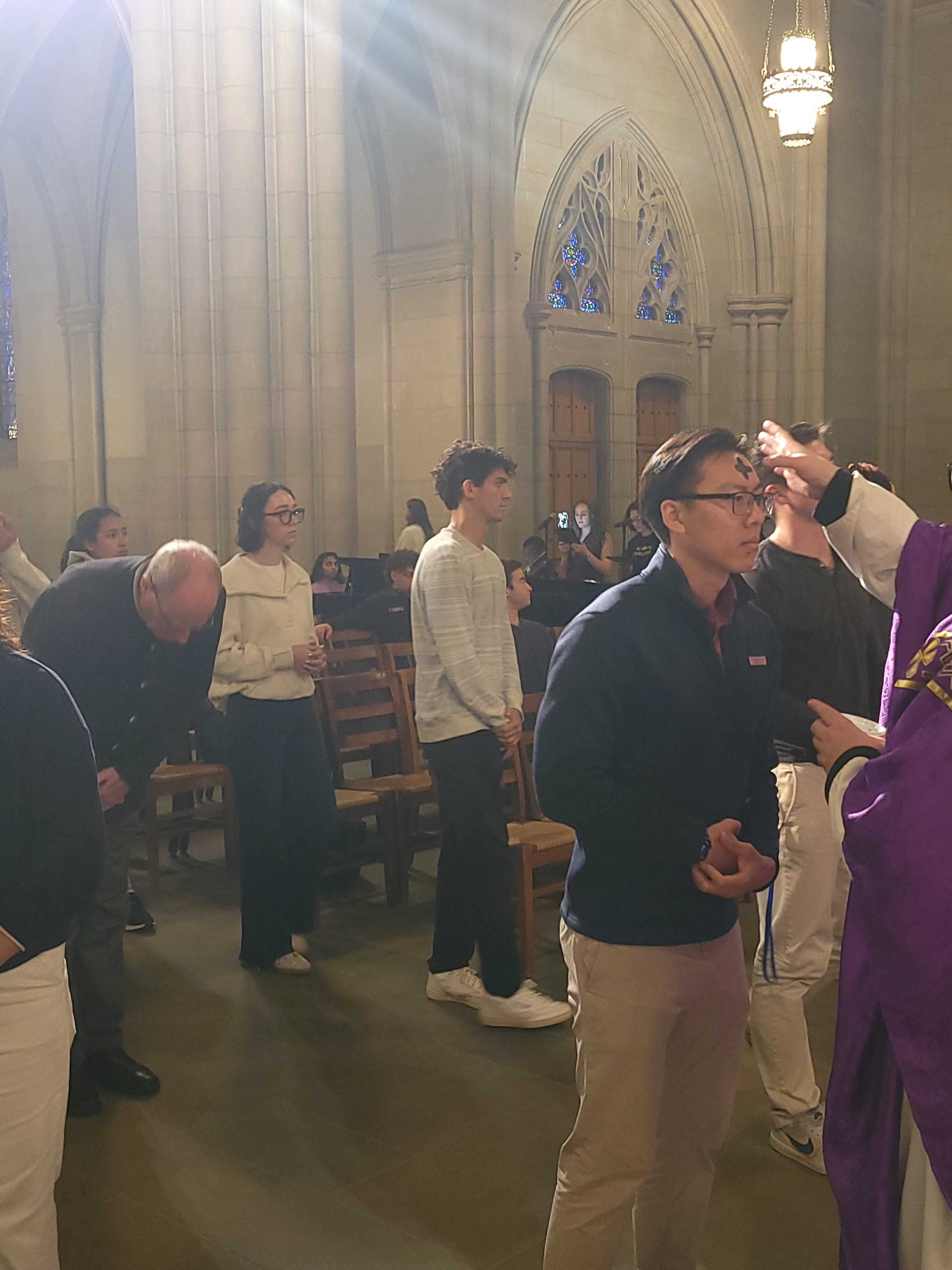
The Gregorian Sacramentary from the 8th century testifies to the practice of receiving ashes on Ash Wednesday. It is a very ancient practice, firmly grounded in Scripture, that we celebrate each year at the beginning of Lent. Ash Wednesday begins the period of Lent, commemorating the forty days Jesus spent in the desert praying and fasting.
In Imitation of Jesus
Before beginning his public ministry, Jesus was in the desert for forty days. He was there to face temptation. We also enter into a time of spiritual battle. We think of Jesus healing the sick and preaching to the crowds. Perhaps, we think less of the true battle of prayer that he engaged in throughout his life and in a special way before beginning his public ministry. To be Christian is to continue the battle and the mission that Jesus entrusted to us.
We are not meant to reduce Lent to a time of giving up sweets. It is a time of special spiritual battle. Some people might object that we are always in spiritual battle. This is true, and yet, like so many other things, spiritual life mimics physical life. Even top-level athletes vary their training, with stark differences between being in-season or off-season.
Jesus has some specific advice for all those who practice this time of Lent. He recognized the possibility of falling into vanity even for something like Lent. If we live Lent like some people do CrossFit, not only is it annoying to others, but it also destroys the spiritual benefits we are called to derive from this time.
When you fast, do not look gloomy like the hypocrites (Mt. 6:16).
For others, it might take other forms. I feel that I am less concerned about trying to look gloomy. I am concerned, however, about becoming grumpy because of an empty stomach. We are not supposed to come across as hangry during these days of fasting. On a side note, be careful with fasting. The Church requires fasting only on Ash Wednesday and Good Friday. Some people choose additional fasting, but it is wise to do so with prudence, and when possible, with guidance, so that spiritual zeal does not harm one’s health.
Baptismal Imagery
In baptism, we die with Christ so that we can rise with him. Through receiving the ashes and reflecting on our mortality, we recall the mysterious death we lived symbolically through baptism. The ashes remind us that our life on earth is short, but they also remind us that death does not have the last word. We have already died with Christ in baptism. Now, during these forty days, we are invited to die more fully to sin so that we may live more fully for him. If we live Lent well, the ashes of repentance will give way to the joy of Easter; and what was marked in dust will be raised in glory.