

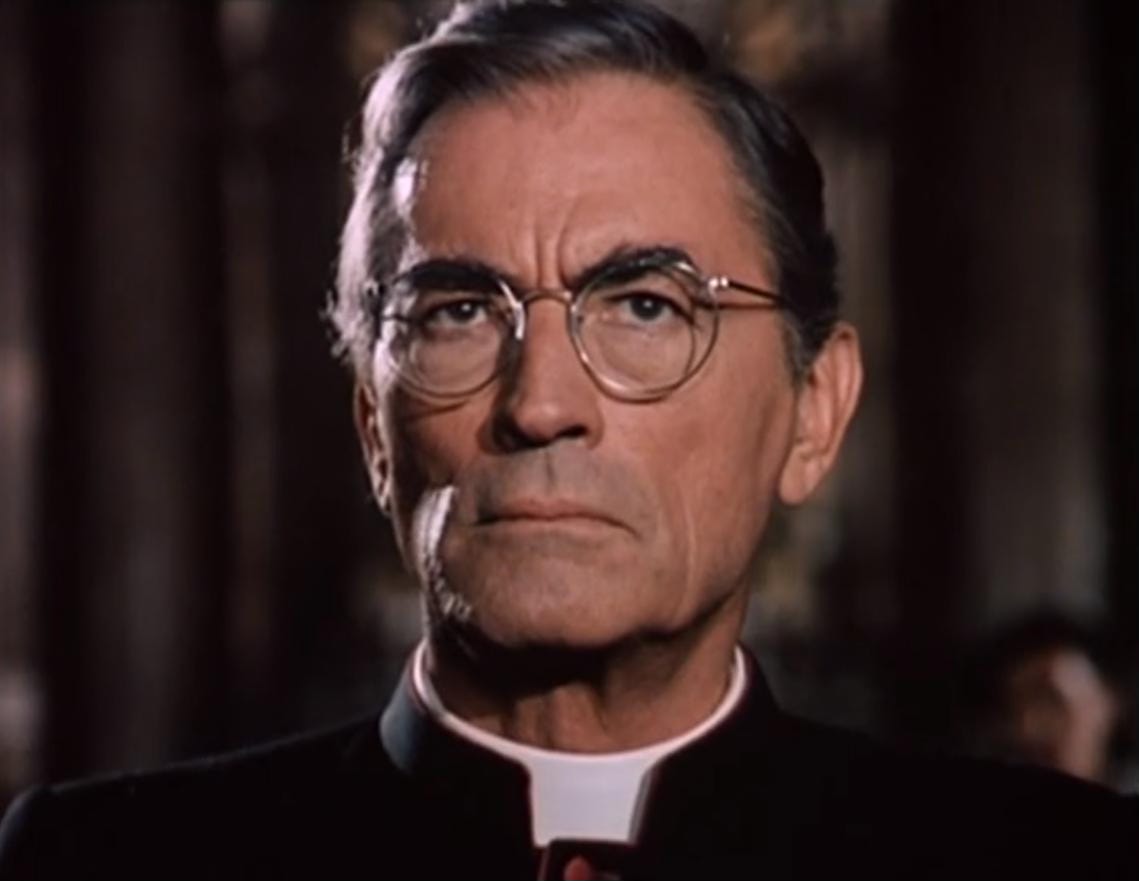
We all face moments when the right choice isn’t obvious, and we wish someone would simply tell us what to do. In the film The Scarlet and the Black, a Catholic priest shelters Allied soldiers hiding from the Nazis in Rome. When his mission begins to endanger not only his own life but even the Pope’s, he asks his confessor what he should do. The confessor replies with just three words: “You must decide.”
Sometimes, we feel the same tension when we need to make important decisions. Joseph knew that tension well. Discovering that Mary was with child forced Joseph to face the mystery and his own inadequacy. He initially considered dismissing her out of respect for her. From the moment of the Incarnation, she already was the Mother of God. Fear surged in his heart – but God spoke into that fear.
Joseph, son of David, do not be afraid to take Mary your wife into your home (Mt. 1:20).
God had a plan for Joseph. Tradition holds that his hesitation came from reverence, not suspicion. Faced with the mystery of God’s work in Mary, he felt unworthy and afraid of the mission before him. God encouraged him through the angel. Joseph chose to step up and fulfill his role.
Because he listened to the angel’s voice, he was able to accept a greater mission than he had ever imagined. He took part in God’s own plan for salvation. The angel revealed the divine origin of the Child.
It is through the holy Spirit that this child has been conceived in her (Mt. 1:20).
Through Joseph’s struggle, we gain a deeper understanding of the Incarnation. It becomes much clearer that Jesus is born of God, because it is evident that Joseph is the adoptive father, not the biological one. God alone could give Joseph the strength to trust the angel. In the same way, only God can give us the strength to stand up for the mission that he gives us in life. How do we recognize what is right to do?
Joseph didn’t follow a legal code; he listened to reason enlightened by grace. Legal code alone might have prompted him to separate from Mary, which was not God’s will for him. Joseph’s discernment gives us a pattern: good decisions arise when reason is open to grace. Pope Benedict XVI deepened this insight when he reflected on the foundations of moral decision-making. Throughout history, legal systems have often been grounded in religion. Decisions about what was lawful usually referred back to the divine.
Today, we often assume that faith and public life must be completely sealed off from one another, which can blind us to the true sources of moral clarity. To navigate difficult decisions, we must let reason – enlightened by grace – lead us, rather than reacting from initial emotion. Pope Benedict explains it this way:
Unlike other great religions, Christianity has never proposed a revealed law to the State and to society, that is to say, a juridical order derived from revelation. Instead, it has pointed to nature and reason as the true sources of law – and to the harmony of objective and subjective reason, which naturally presupposes that both spheres are rooted in the creative reason of God (Pope Benedict XVI, 22 September 2011).
We must harmonize the objective and subjective dimensions of our moral decisions. This becomes possible when our minds and hearts are aligned with the creative reason of God.
Joseph teaches us that good decisions come from listening – listening to reason, to the quiet voice of conscience, and most importantly to God’s call. As Pope Benedict reminded us, what is right isn’t ultimately arbitrary or merely cultural; it comes from the harmony of reason with the God who created us. Joseph overcame fear by trusting this harmony, and the same path is open to us. If we listen without fear, we too can step into the mission God entrusts to us. Good decisions begin with listening. Holiness begins when we listen without fear. Advent invites us to begin again.
Loving these reflections, Father!