

Do you believe in miracles? The phrase might transport us back to the collective memory of the US Hockey Team defeating the Soviet Union for the gold medal in 1980. Often, we are told,”All you have to do is believe.” We hear about belief in relation to sports teams, to politicians, and to personal goals. This cheapens the very concept of faith. What does it mean to believe? Faith is an oft-used word, even in non-religious contexts. When Karol Wojtyła stepped out onto the loggia at St. Peter’s Basilica in 1978 as Pope John Paul II, the world watched in amazement as he became the first Polish successor of Peter. In a postmodern world, what place do the Church, faith, and religion even have?
Paul Tillich and Faith as “Ultimate Concern”
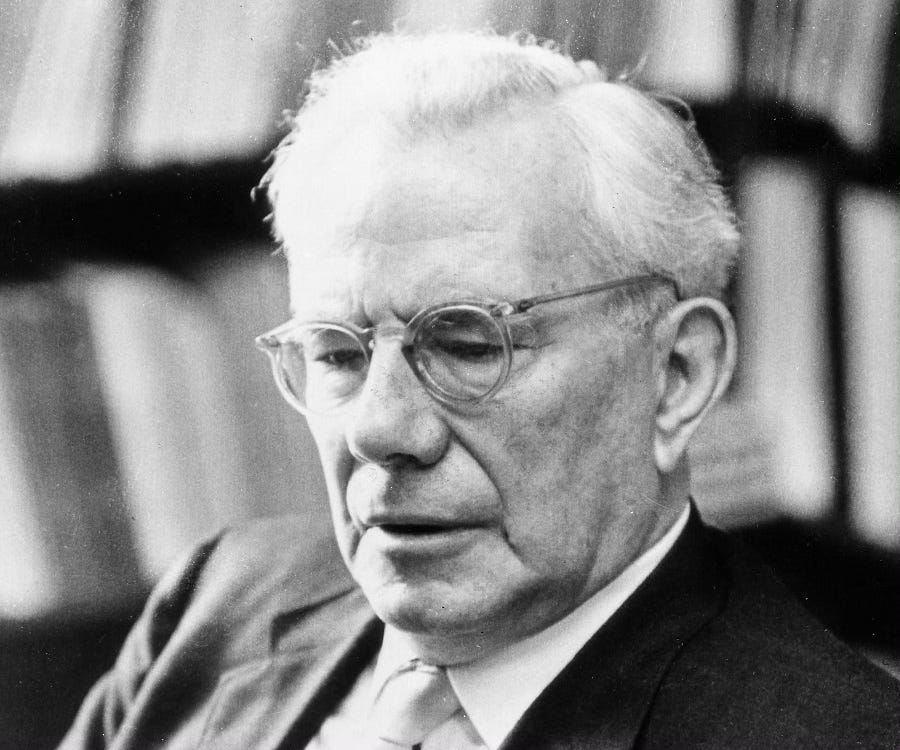
Paul Tillich is one of the most renowned theologians of the 20th century. He explored the topic of faith and described it in a way that could fit the postmodern mind. He described faith as devotion to the “ultimate concern.” Drawing on Kant with the Copernican turn of thought from the objective to the subjective, his description of faith fits in perfectly. The important thing is to be completely devoted to the object of faith.
Faith is the state of being ultimately concerned: the dynamics of faith are the dynamics of man’s ultimate concern (Paul Tillich, Dynamics of Faith, 1).
This definition focuses on the subjective act of faith and relates it to the polarizing concept that motivates and guides a single individual. He relates freedom to faith as they are both the “possibility of centered personal acts.”
This contrasts with the way that Pope St. John Paul II looks at faith. For him, the center is still the object of faith, at the same time that he is interested in the subjective experience of believing. For him, faith is the free response of the believer to the self-revelation of God. This hearkens to the teaching of St. Augustine, pointing out that every religion expresses man’s desire to come into contact with God. What distinguishes Judaism and Christianity is that we experience the descent of God to man. Through revelation, God opens the path to communion and relationship with him.
Existential Act
Drawing on existentialist philosophy of the 20th century, Tillich emphasizes the reality of the experience of the whole person though the act of faith. Wojtyla emphasizes the personal act at the same time that he underlines the objective self-revelation of God. Faith consumes all that we are.
It is not just that freedom is part of the act of faith: it is absolutely required (Pope John Paul II, Fides et Ratio, 13).
There is an intersection with the insight of the existentialist philosophers, while maintaining the distinction that the ultimate purpose of our lives is received by us, not created by us. One of the possible pitfalls of adopting existentialist philosophy to reflect on faith is that there is a tendency to deny purpose and meaning. For Wojtyla, life is full of meaning and purpose, precisely because through faith, we come into contact with our Creator who placed us on earth with a mission.
Object of Faith
Wojtyla and Tillich differ not only in their understanding of the experience of faith. They diverge also on the object of faith. When someone believes in God, what does that mean? For Tillich, God is the “Ground of Being,” rather than a being among beings. This is attractive for postmodern thought, giving a place to God but emptying the concept of God of its full meaning. Wojtyla, on the other hand, proclaimed the reality of a personal God who enters into relationship and communion with us.
Referring to the branch of theology that focuses on a philosophical reflection on the act of faith and the contents of faith, John Paul II writes:
fundamental theology should show how, in the light of the knowledge conferred by faith, there emerge certain truths which reason, from its own independent enquiry, already perceives (Pope St. John Paul II, Fides et Ratio, 67).
Reason perceives the reality of God. Following the Vatican I reflections on the capacity of man to attain knowledge of God, the role of theology is to explicate the truths of faith, not explain them away into something beautiful to contemplate but fundamentally unreal.
Just a Symbol?
Tillich explores the value of symbols and suggests that they participate in the reality they signify, but are not literal descriptions. Such an interpretation allows theologians to explain away Gospel truths in a way that feels more comfortable and acceptable to a postmodern mentality. On the other hand, John Paul II proclaims that symbols have their value and that revelation communicates real truths about God.
The difference was illustrated by a now famous anecdote from a dinner party that the Southern author Flannery O’Connor attended. Deeply Catholic in a non-Catholic atmosphere, at one point someone discussed the doctrine of the Eucharist and stated: it’s just a symbol. O’Connor is said to have responded: “if it’s just a symbol, to hell with it.” Her somewhat crass remark belied a deep faith. What look like bread and wine become truly the Body and Blood, Soul and Divinity of Christ and through Communion, we participate truly in the divine life, receiving Jesus into our soul. For this reason too, Pope John Paul II wrote so frequently and profoundly on truths like the Eucharist, the priesthood, and our personal relationship with Christ.
Faith and Doubt
Doubt is part of the experience of faith, according to Tillich. The “ultimate concern” allows for fundamental doubt. This contrasts with the view of realist philosophy that recognizes that truth is hard to ascertain, but not impossible. It is natural to have struggles with faith, but this is not the same as emptying the doctrine of its importance, as happens in postmodern deconstruction of the act of faith.
Doubt is part of Tillich’s description of faith. Because how do you know that your “ultimate concern” is the correct one? And you also notice that it is easy to be devoted to something that is at best of secondary concern.
Common Ground and Confrontation
The existentialist bent of Tillich emphasizes that faith is not merely intellectual assent to a revealed truth. Enriching Thomistic metaphysics through the phenomenological method and coming from a personalist point of view, Wojtyla would have recognized the value of examining the subjective aspect of the act of faith. For him, faith is essentially man’s response to a personal call from the one, true God. It is a free act, whereby the person entrusts himself completely to God.
They would agree that faith cannot be reduced to an emotion or to blind obedience. Wojtyla would recognize the contribution of Tillich, to bring the concept of faith to the forefront again in a world claiming to move away from faith and towards reason. The postmodern world sees itself as the fullest expression of the Enlightenment. Tillich is more palatable to such thinkers, who want to reflect on faith, while holding on to reason.
By confronting the thought of Wojtyla with Tillich, we find its true value. In a postmodern world that distrusts faith, he is able to portray the reciprocal relationship between faith and reason. By engaging with the concept of faith proposed by Tillich, that of “ultimate concern,” we are able to see that faith has a place in today’s world.
Conclusion
For Pope St. John Paul II, faith cannot be described simply as “the state of being ultimately concerned.” It is not simply the structure of ultimate commitment. Rather, it is man’s response to the self-revelation of the loving God. Ultimate concern may describe faith in its intensity, but can be attributed to devotion to God, to the nation, to family, etc. It cannot by itself describe the essence of religious faith. Ultimately, faith is the encounter between a God who loves and a creature whom he loves.
Well said! I found Tillich a great diagnostician of our post modern angst--think, the Scream!--who tried to bridge Christianity to an increasingly indifferent secular world. Father, I do wonder how Pope Saint John Paul II viewed Tillich's rejection of natural theology and tendency to see God as not distinct from creation, lacking the personal connect that the Pope emphasized. What are your thoughts?