

Not like the brazen giant of Greek fame,
With conquering limbs astride from land to land;
Here at our sea-washed, sunset gates shall stand
A mighty woman with a torch, whose flame
Is the imprisoned lightning, and her name
Mother of Exiles. From her beacon-hand
Glows world-wide welcome; her mild eyes command
The air-bridged harbor that twin cities frame.
“Keep, ancient lands, your storied pomp!” cries she
With silent lips. “Give me your tired, your poor,
Your huddled masses yearning to breathe free,
The wretched refuse of your teeming shore.
Send these, the homeless, tempest-tost to me,
I lift my lamp beside the golden door!” (Emma Lazarus, “The New Colossus”)
The Statue of Liberty on Ellis Island is one of the most iconic images of the United States. The Statue of Liberty, a gift from France dedicated in 1886, became one of America’s enduring symbols of freedom, inspiration, and hope. This image welcomed over 12 million immigrants during the 62 years that Ellis Island served as the main port of entry to the United States.
Emma Lazarus’ poem, “The New Colossus,” captures the essence of the statue. Making a callback to classical themes, it nevertheless echoes the words of Jesus Christ in today’s Gospel.
Come to me, all you who labor and are burdened,
and I will give you rest.
Take my yoke upon you and learn from me,
for I am meek and humble of heart;
and you will find rest for yourselves.
For my yoke is easy, and my burden light (Mt. 11:29-30).
Jesus does not promise an easy life. He does, however, promise a purposeful life. When we live each day for Jesus, he unlocks untold treasures that we can receive and that will fill our hearts with joy and peace.
We live in a time of both light and shadow. There is much to celebrate. As Americans, we commemorate the 250thanniversary of our nation’s founding. Yet there are also deep shadows. Wars rage abroad, polarization continues at home, and within the Church, we are witnessing fresh wounds to her visible unity. These joys and hopes, these griefs and anxieties, are profoundly human, and therefore profoundly important to the Church.
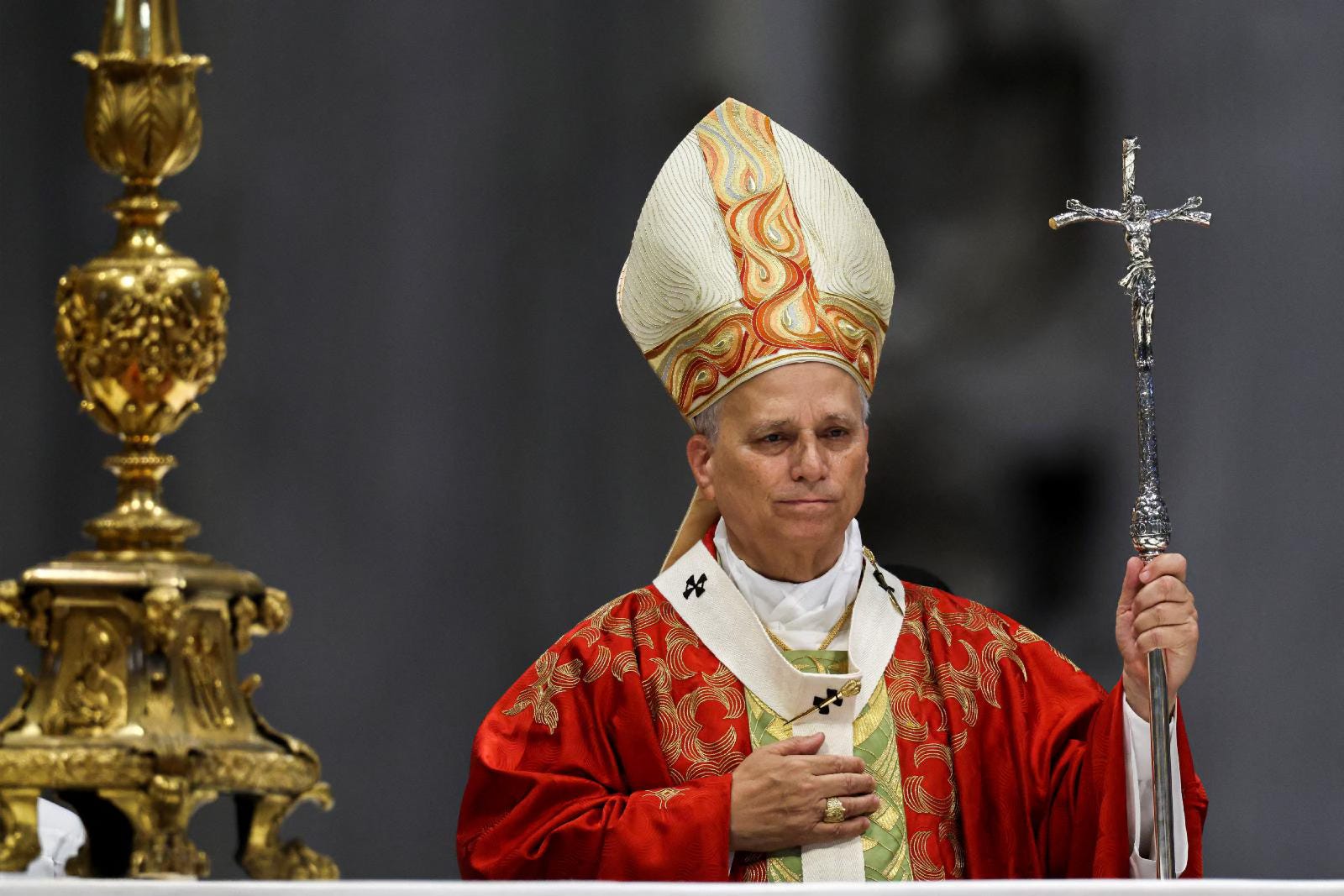
These are precisely the kinds of joys and hopes, griefs and anxieties that the Church makes her own. At the beginning of the Pastoral Constitution of the Church in the Modern World, Gaudium et Spes, we read:
The joys and the hopes, the griefs and the anxieties of the men of this age, especially those who are poor or in any way afflicted, these are the joys and hopes, the griefs and anxieties of the followers of Christ (Gaudium et Spes, 1).
There is no human suffering that is completely alien to the concerns of the Catholic Church. We are living now in a time of turmoil for some of our brethren. Those who have chosen the path of schism have broken the visible bonds of ecclesial communion. Their call to preserve Catholic tradition ultimately loses credibility when it is accompanied by a rejection of the visible unity Christ entrusted to Peter and his successors. Fidelity to tradition can never be separated from communion with the successor of Peter.
Christ’s invitation is not merely addressed to individuals burdened by sin or suffering. It also extends to those who find themselves separated from full communion with his Church. The same heart that welcomes the weary also seeks the return of those who have wandered.
What does Christ think in such a moment? The Church, while being clear about the consequences of the illicit episcopal consecrations, also stretches out her hand to the priests and faithful, offering them a way back. They must, however, reaffirm their faith, especially their adherence to the Roman Pontiff. The Pope reflects the meekness of Christ: firm in defending the truth while never closing the door to reconciliation.
See, your king shall come to you;
a just savior is he,
meek, and riding on an ass,
on a colt, the foal of an ass.
He shall banish the chariot from Ephraim,
and the horse from Jerusalem;
the warrior’s bow shall be banished,
and he shall proclaim peace to the nations.
His dominion shall be from sea to sea,
and from the River to the ends of the earth (Zech. 9:10).
The tragedy of schism is that it wounds the visible unity Christ desires for his Church. Whenever Catholics separate themselves from full communion, even while preserving much of the Church’s tradition and liturgy, they deprive themselves of the fullness of ecclesial life.
The Church stands as a new Colossus, offering those who have wandered a way back, a way to peace. Those who may be torn and pressured by the confusing times in which we live are called to rekindle their hope and come home to the Catholic Church.
Emma Lazarus imagined a colossal woman lifting a lamp beside the golden door, welcoming the weary to a new home. The Church carries an even greater light: not one that leads to a new nation, but to a new creation. She welcomes not merely immigrants but sinners, pilgrims, and all who seek reconciliation with God. Her invitation remains the same as that of Christ himself: “Come to me”. Come home.