

Grace and gratitude go together. And where there is no gratitude, it is difficult for grace to work its way in.
In the novel, The Diary of a Country Priest, Georges Bernanos tells the story of a young priest serving a dying rural parish. His ministry is misunderstood, his reputation is attacked, and his health collapses. Yet as he approaches death, he simply says: “What does it matter? All is grace.”
Only someone who has learned gratitude can say something like that. To look at suffering, misunderstanding, even death, and still say: “All is grace.” The Pharisees in today’s Gospel see a miracle happen but fail to see the gift of grace. Instead, they get hung up on what Jesus may and may not do.
Missing Grace
The Pharisees cannot see grace because they already think they understand God. If God acts outside their expectations, they reject it. They fail to see the hand of God present and active in the world. They show how we can be harsh and judgmental of God. We assume that we can determine God according to our own imagination.
This is the temptation of the Pharisees, and it can become our temptation as well. Sometimes we begin to decide who can be saved and who must be condemned. When we learn about sin, that is a good thing because it helps us avoid what is evil. God does not give us that conviction in our hearts, though, so we can judge others rashly. “Judge not” (cf. Mt. 7:1) does not mean to ignore evil, but rather to be generous and forgiving towards others so that God will be generous and forgiving towards us. The Catechism of the Catholic Church puts it this way: we should interpret our neighbor’s thoughts, words, and actions “in a favorable way” whenever possible. (Catechism of the Catholic Church, 2478).
Sometimes our rash judgment comes from a faulty view of who God is. It’s easy to say that God “can’t do this” or “must do that” because this fits in with our accepted image of God. We would do much better to contemplate the greatness of God and let that reality confront us.
The hubris of the Pharisees contrasts starkly with the humility of the man born blind. He simply gives witness to the power of Jesus. They ask him a series of questions. He answers simply and straightforwardly, knowing that Jesus had rubbed mud in his eyes and now he could see. One of my favorite phrases in Latin is contra facta, non sunt argumenta, which means “you can’t argue with facts.” The blind man tells them:
I was blind, and now I see (Jn. 9:25).
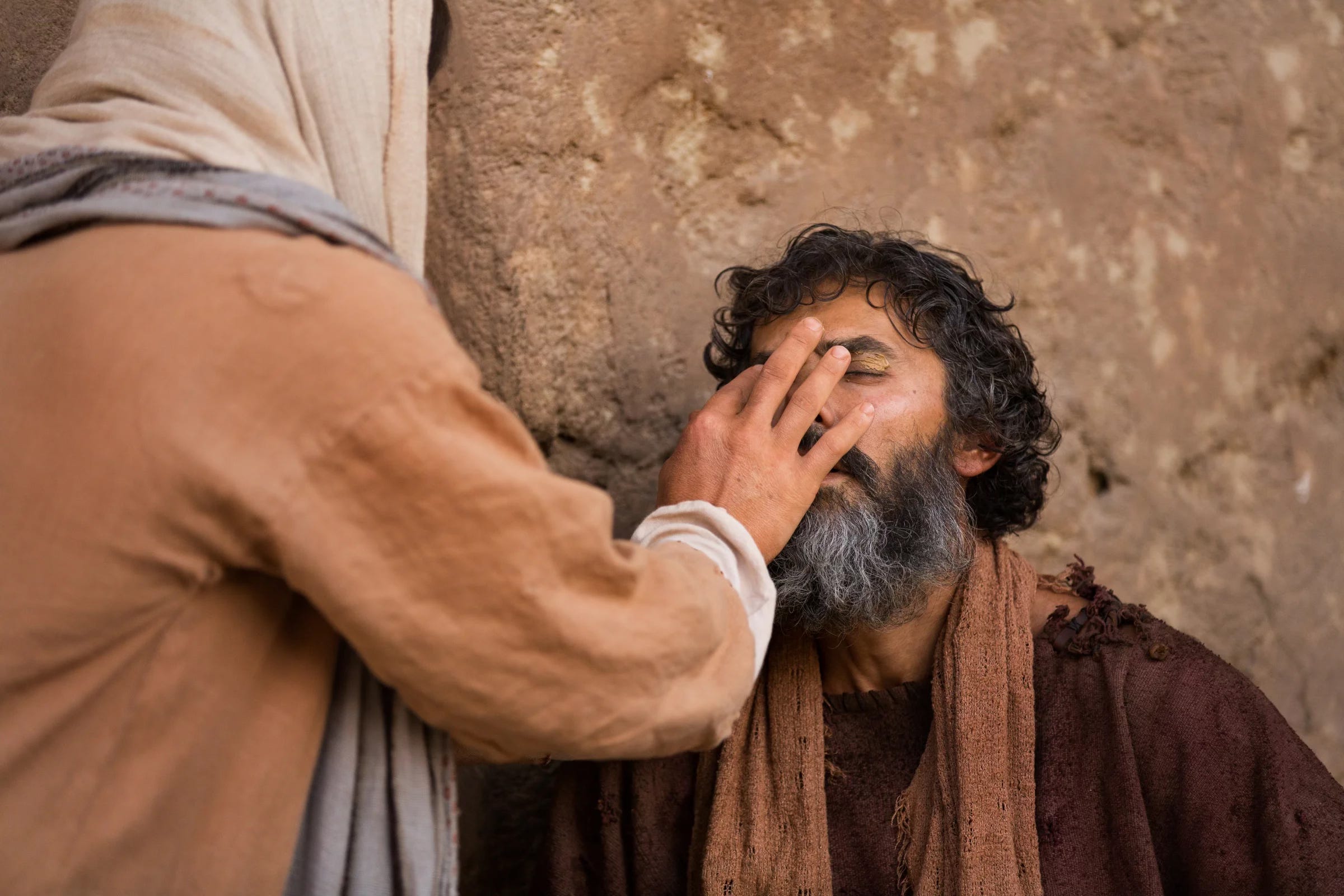
The Pharisees try to make the man change his story, but his story is personal and incontrovertible. Hopefully, we all have encounters with Christ that we cannot doubt. One of the bedrock realities of my own faith is the tremendous gift of the Eucharist. It can feel hard to believe that Jesus is really present in the sacrament, yet once we believe this, the rest of the faith seems to fall into place.
What Can Never Change?
What are the things in your faith that can never change? What keeps you rooted firmly in Christ? It is important to cultivate gratitude for these things so that your faith will be strong enough to weather the storms that will surely come.
Just like the young priest from Bernanos’s story had to hold on to his faith despite tremendously challenging external events, we need to learn to hold on to our faith despite every external difficulty.
The Pharisees argued about theories.
The blind man simply told the truth: “I was blind, and now I see.”
Every Christian needs moments like that: moments of grace that cannot be explained away.
Hold on to them. Be grateful for them.
Because when the storms come; and they will; it is gratitude that allows us, like Bernanos’s young priest, to say:
All is grace.